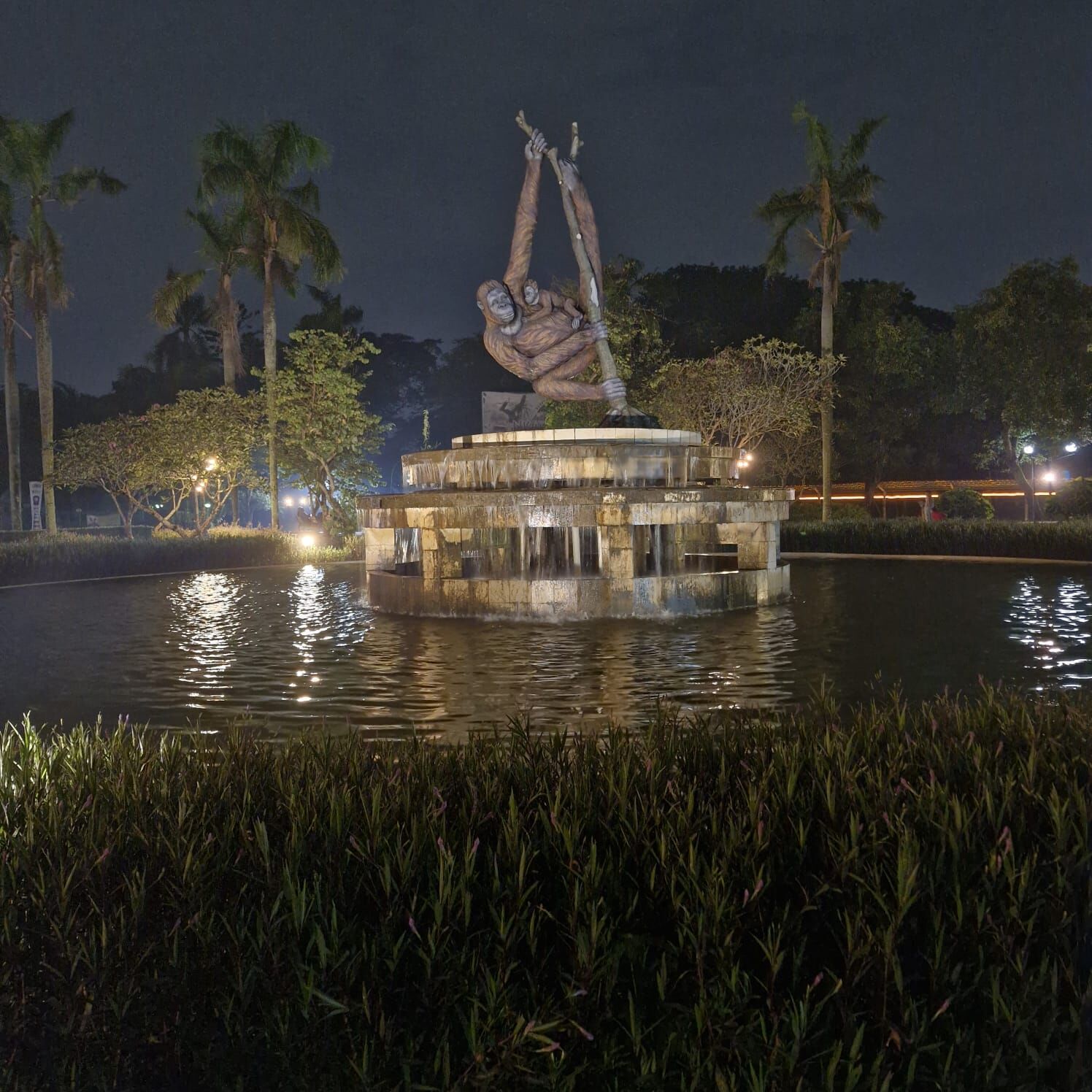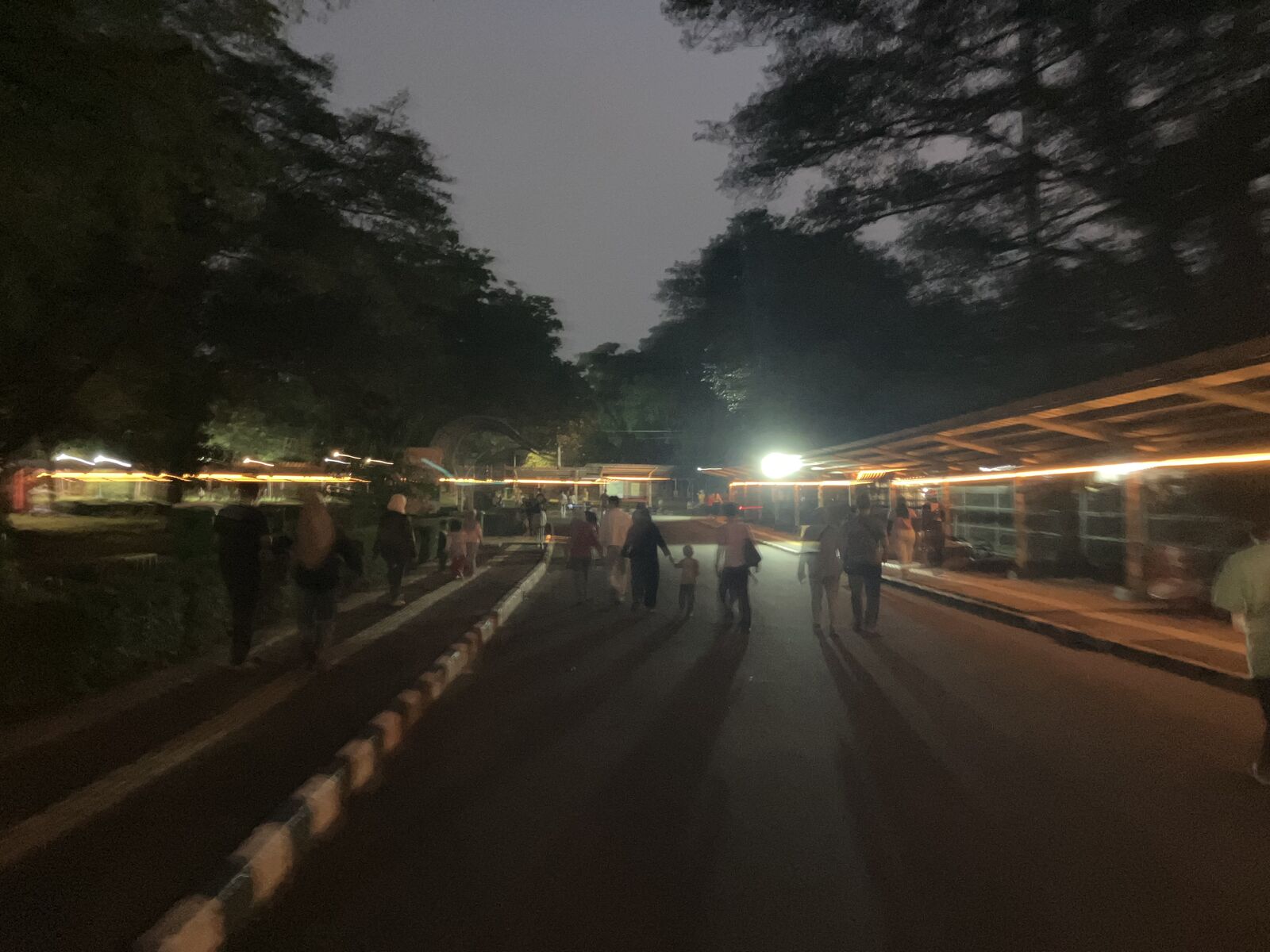
What you should know about Ragunan Zoo is that it looks better at night. The dark hides the flaws and all the rusty things that make the whole place look outdated. The zoo's problem is a lack of maintenance — all the rust and clutter. You don't see any of that after sunset.
The darkness also brings atmosphere. The dark, together with the canopy of trees, makes it feel like you're really in a rainforest. Meanwhile, the walkway heightens the feeling that you're out in the wild, where a tiger or some other wild animal might jump out at you.
Don't worry, it won't.
The dark hides the flaws and all the rusty things that make the whole place look outdated.
The atmosphere at night raises your expectations the moment you walk through the gate. On the other hand, the Ragunan Night Zoo is a much more "on rails" experience: you're limited to one path and you are, quite literally, guided. After all, you end up taking buggies from one part of the zoo to another.
Compare this to daytime Ragunan, where you can explore the zoo by yourself. You have many paths to take. It can get crowded, and you can get lost because you don't know where you're going.
The Night Zoo is completely different. It's a guided tour.
The price is completely different too. Admission is around 250,000 rupiah for five people, so 50,000 per person. That's far more expensive than Ragunan during the day, which costs 4,000 rupiah per person. (That rather low price probably means the zoo isn't making enough money for proper upkeep, and may be why management is struggling to improve it — but that's a topic for another article.)
Clearly, the guided tour costs much more. But it's more than worth the price. A real guided tour means having an actual guide with information beside you, plus the chance to feed the animals under the keepers' guidance. I'll get to that in a bit.
First, payment, because I did have problems paying for tickets. Things may have changed since my visit about a year ago, but my experience was egregiously bad. Paying was surprisingly hard to figure out. Basically, you need a topped-up JakCard or e-money card to pay for the tickets. There's no other way. You can't use QRIS, even though almost every other business in Jakarta — even a random street vendor — accepts it. Again, this was a while ago, so things might be different now. But the difficulty of paying seriously dragged down the experience for me.
If nothing else, I hope this never happens again, at Ragunan or any other zoo.
The Hippo Zone
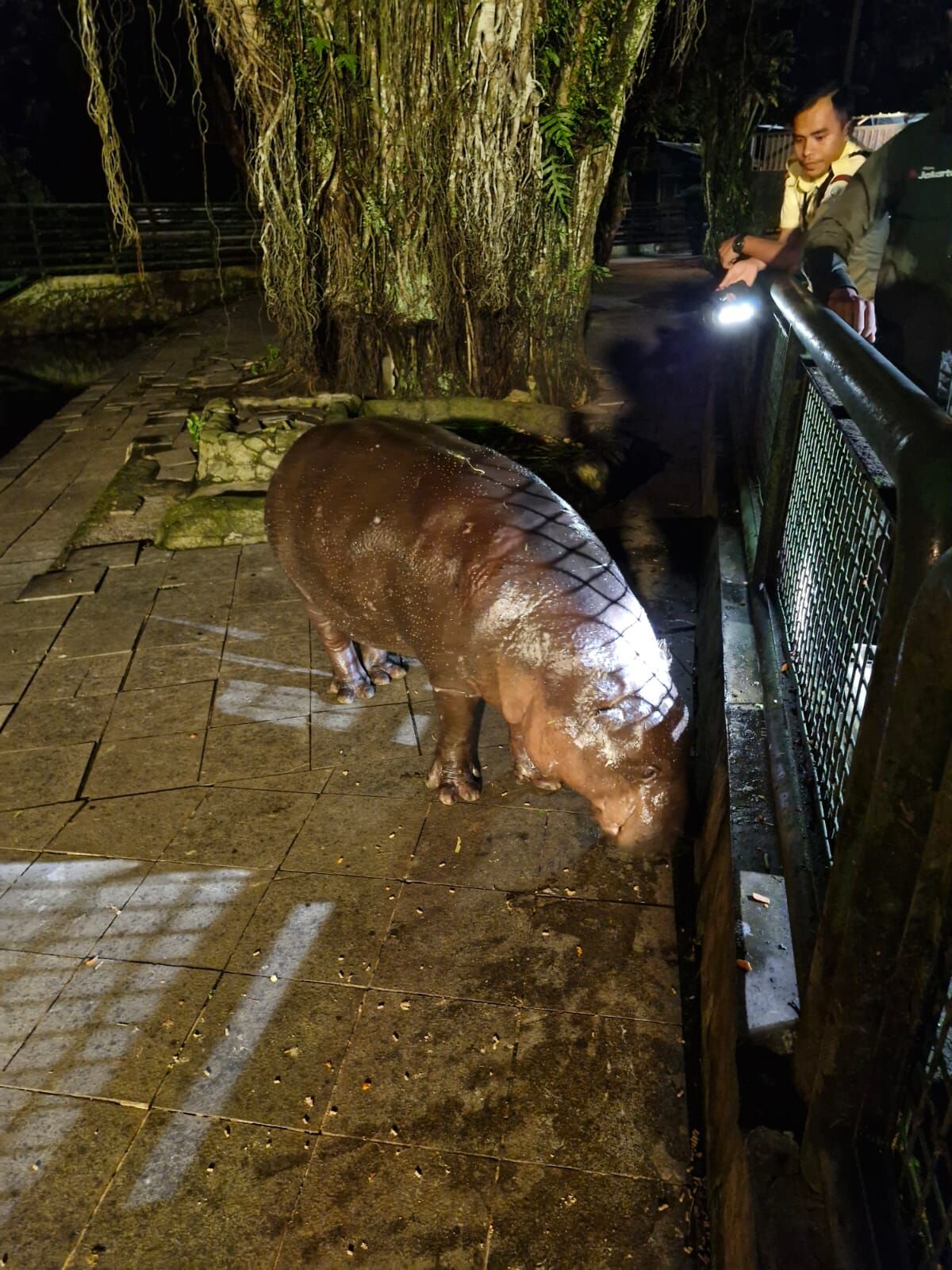
Now on to the buggy rides. You start in one of four zones. Our first was the pygmy hippo enclosure, and it's really good. The keeper explains everything about the hippos. Even better, you get to experience the animals up close. You can ask the keepers how they look after them, and so on.
You also get to feed the hippos by hand. They eat fruit and vegetables. Of course, feeding a hippo can be scary at first — they have really strong teeth, and you can't help imagining one biting your hand off if you're not careful. But you'll be fine as long as you're careful and don't do anything stupid.
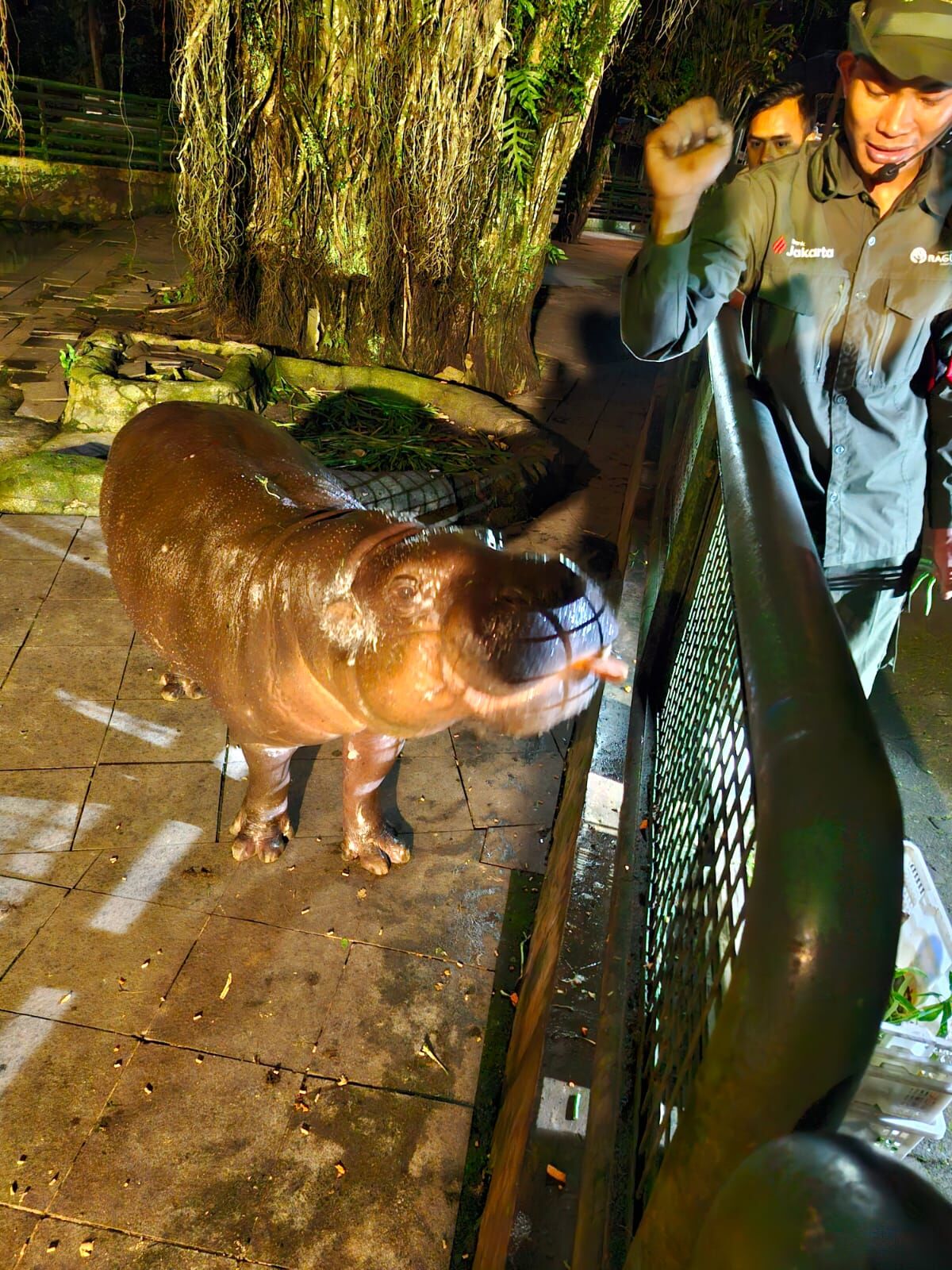
All in all, it's a really good experience. The hippos alone made it worth 50,000 per person — especially if you come from overseas, where an encounter like this might cost around 50 US dollars.
Now to the hippos themselves. Ragunan, I was told, keeps them for education. Pygmy hippos aren't native to Indonesia; they come from West Africa. Keep in mind, too, that the pygmy hippo is classified as Endangered. That matters, because it means Ragunan has an important responsibility on its hands in keeping them.
During my visit, I was told the hippos came from Surabaya Zoo. Given the care Ragunan's keepers give them, the good people of Surabaya Zoo can rest easy that the animals born in their care are in good hands.
The Small Mammal Zone
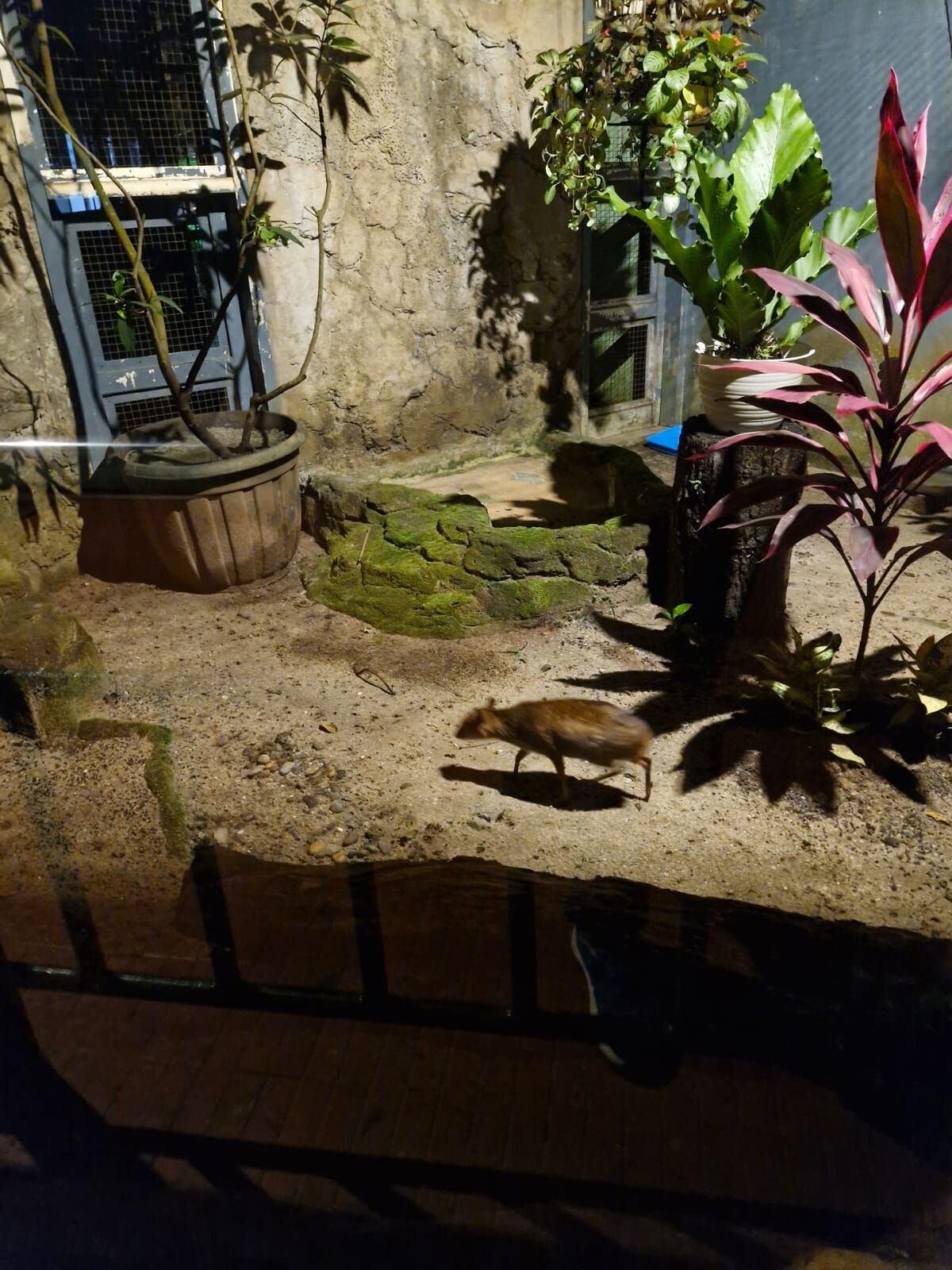
Next, the small mammals. Apart from the tigers, this is actually my favourite part of the zoo. The section has two buildings housing small nocturnal animals native to Indonesia or South America — but mostly Indonesia.
The animals here include otters, binturong, lesser mouse-deer, mongooses, pangolins, and civets. It's a great assortment. If you love small mammals, you will enjoy seeing them in their exhibits. If you like this part of Ragunan during the day, you'll love it at night. And if, like me, you love Southeast Asian animals, it's even sweeter.
Yet there are still issues. Despite some recent improvements, this place is outdated. The building dates from 1995 and badly needs changes, or at least a renovation. While the animals are cool, the exhibits don't really complement them. That matters even more at night, because the exhibits pull you right out of the rainforest ambience the whole Night Zoo concept works so hard to put you in. In one fell swoop, the immersion is gone.
There are guides in this section too. They teach you what the animals are, what they eat, and where they live. Unfortunately, I have bad news here as well. On repeat visits, I found that not all the guides are equally good. I asked them questions to test their knowledge. As it turns out, the best guides I met were during the first two or three weeks after the Night Zoo opened. Later on, some of the keepers I met were inexperienced and had no idea what they were talking about. One of them, for example, said capybaras live in Southeast Asia rather than South America, which is completely wrong.
To put it simply, not all keepers are created equal.
Overall, I like the small mammal zone. But it still looks outdated and barren, especially for moderately sized animals like the binturong. The otters are another example: zoos other than Ragunan have done a better job of presenting them.
Ragunan looks old and needs work. There's no other way to say it. The rust is there for all to see, especially during the day.
What makes this even more painful is that Ragunan has become the face of Indonesian zookeeping. On one hand, there's clear improvement in line with the worldwide trend in zookeeping since the early 20th century. On the other, it's clearly behind other Indonesian zoos such as Jakarta Aquarium and Taman Safari. Ragunan is the oldest zoo in the country and it shows: it has seen the least facility modernisation of them all.
But I don't want to keep ranting about the state of Indonesian zoos. I'll save that for another article. On to the next section.
The Tiger Zone
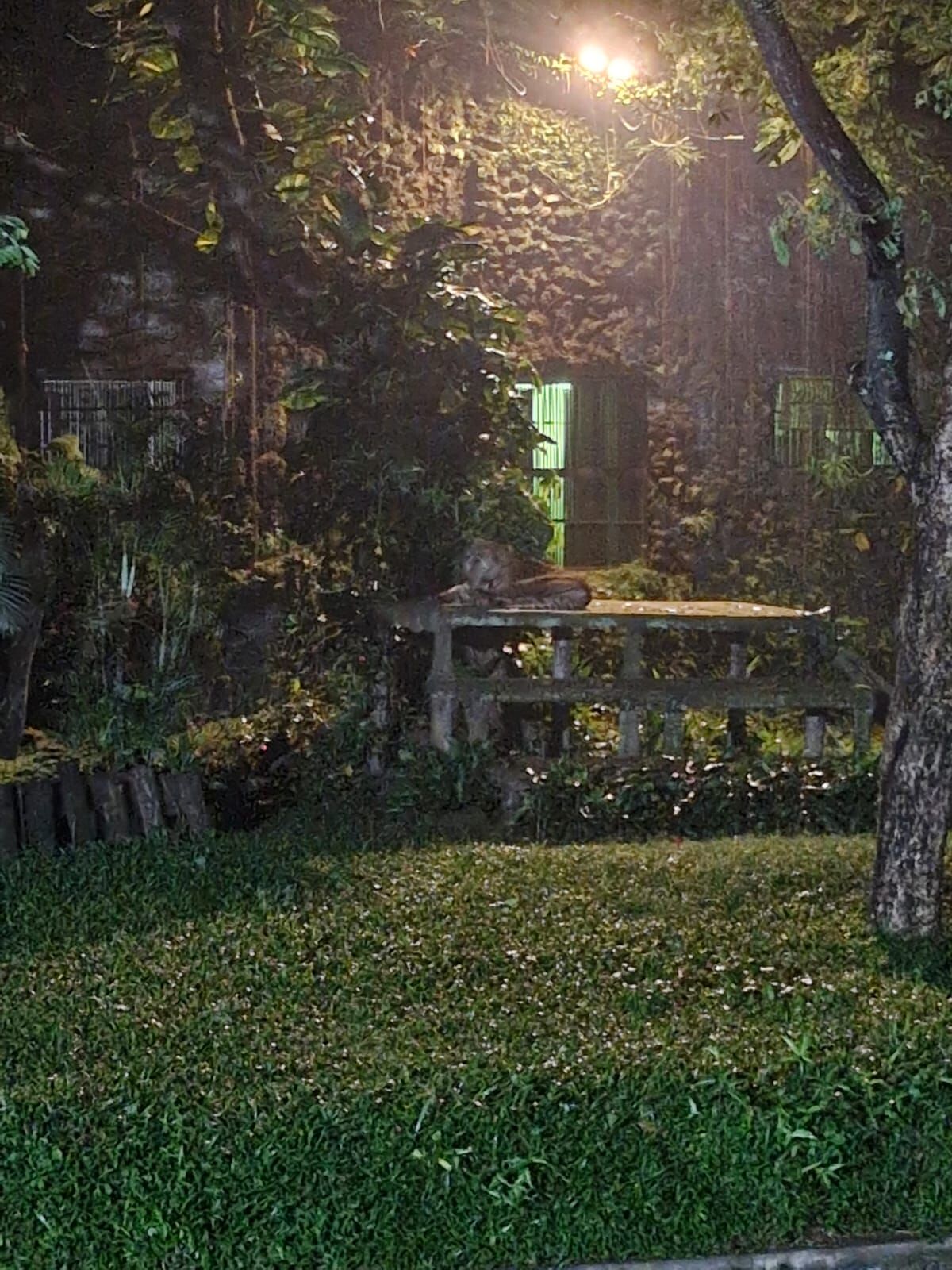
The tiger exhibit is the best the zoo has to offer. These are Sumatran tigers. The exhibit is already pretty good in the daytime; at night, it's even better. The lighting is spot on, and the water around it makes it look like an island domain with the tigers as its masters. Put simply, it feels natural. The tigers look like they have a lair. You even get the impression it isn't an enclosure at all — which reminded me of the tigers at a night zoo I visited in Singapore.
Just like the other zones, a keeper guides you and gives you information. I have better things to say about the keepers here than in the small mammal section: when it came to the tigers, they were consistently knowledgeable. 5/5, no complaints about the keepers whatsoever.
There is a downside to the tiger area, though, and it concerns the toilet. When I went to use it, I saw a big huntsman spider — not part of any of the zoo's exhibits, of course. That could be a real problem for visitors, especially arachnophobic ones. To me, this is a failure of the cleaning crew. Staff need to keep an eye on these things and keep the place tidy. Huntsman spiders are harmless, but their size means one could freak some people out.
But back to the tigers: Ragunan does a good job. In fact, I'd say they've done too good a job, because they have a lot of tigers — too many. As of writing, Ragunan has 17 tigers, most of which aren't part of the Night Zoo.
I'm just speculating here, but it looks to me like Ragunan doesn't know what to do with all its tigers.
All that said, Ragunan deserves kudos for maintaining a good population of Sumatran tigers. They're the last surviving tigers in Indonesia — the Javan and Bali tigers are extinct — so the zoo is doing some good work.
Good job with the tigers, Ragunan.
The Reptile Zone
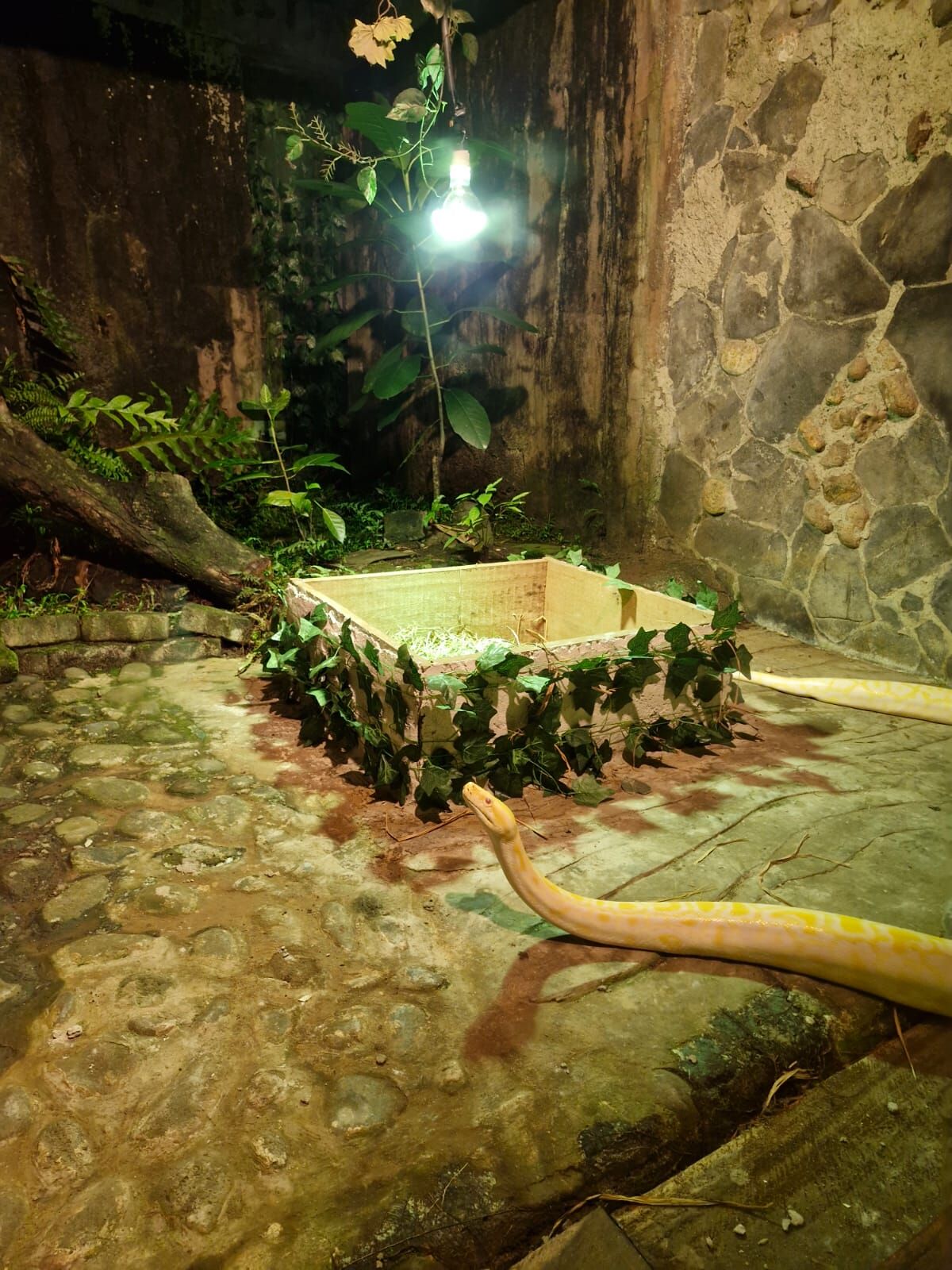
Next, the reptiles. Let me establish from the start that the place has good atmosphere. The reptiles themselves look okay; I've seen better enclosures, and better animals. But what the reptile section of the Ragunan Night Zoo has that most others don't is the vibe.
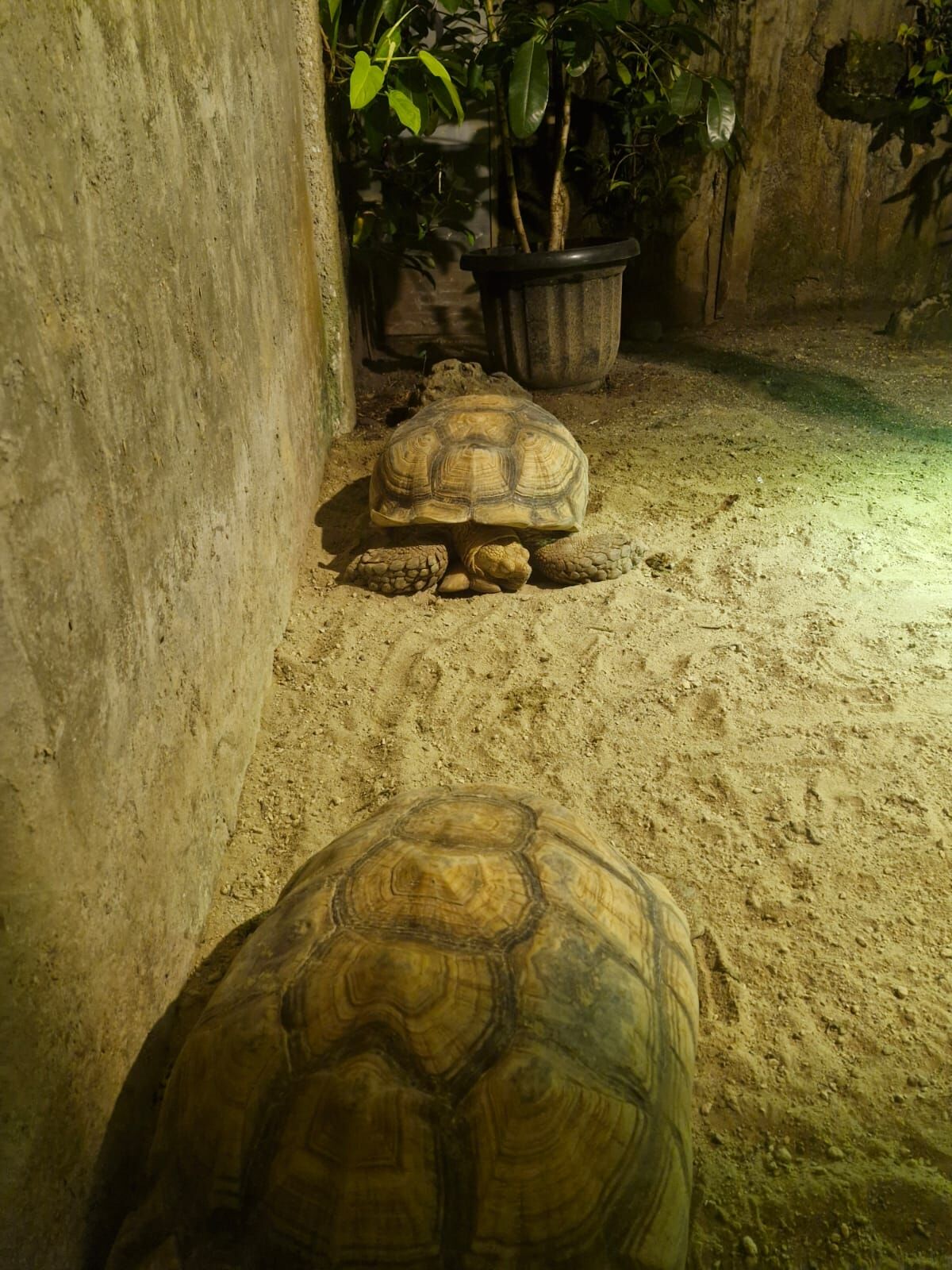
This area is the designated quiet zone. So instead of a keeper, you see the enclosures on your own, accompanied by soothing gamelan music. It fits the overall atmosphere of a beautiful rainforest.
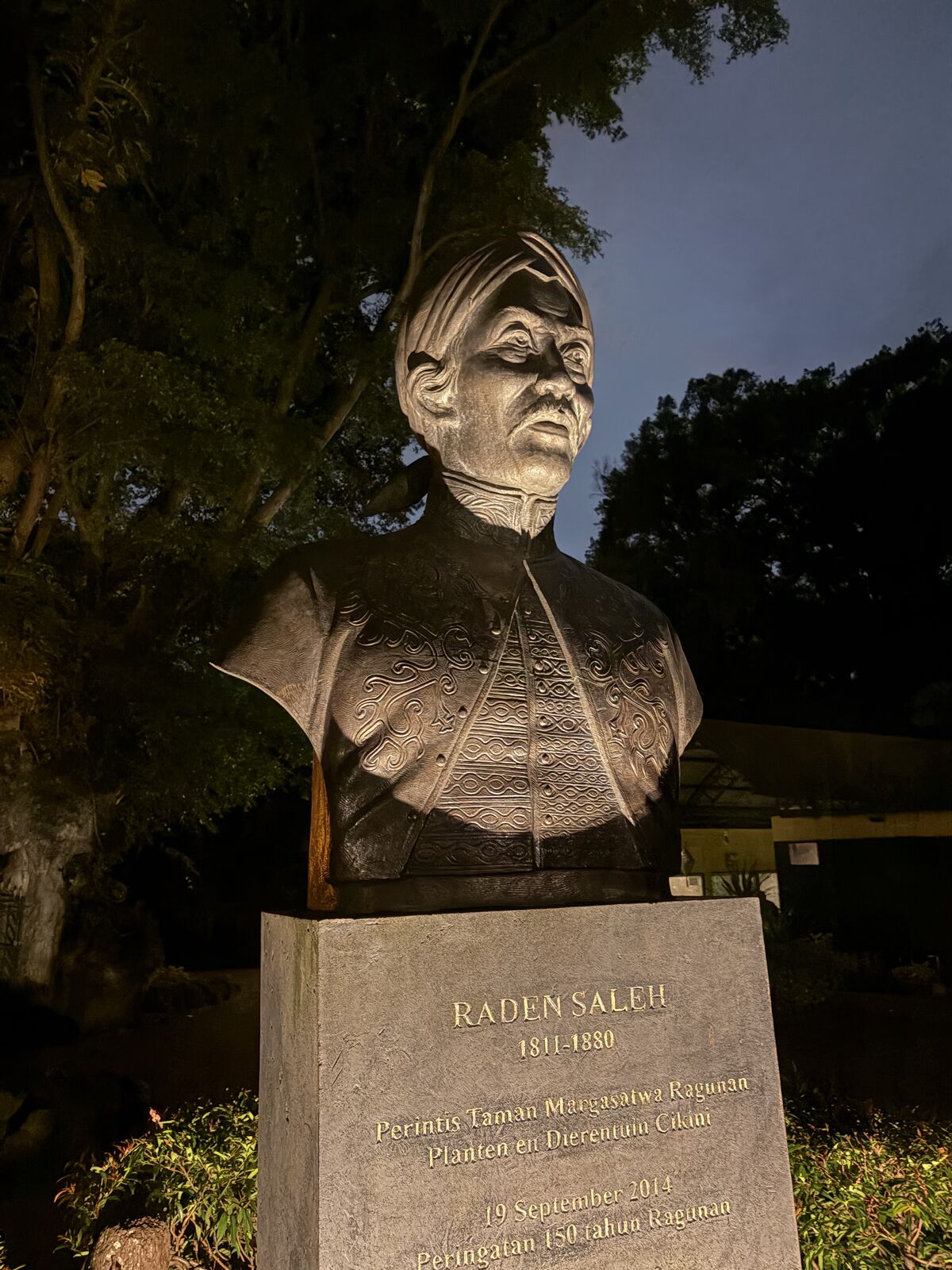
You'll recognise this place by the statue of Raden Saleh.
Unfortunately, I have some criticism to offer. It's a problem that has been going on for six or seven months, yet somehow remains: the information signs in front of the animals aren't visible in the dark, so to learn about the animals you're looking at, you have to ask the nearby keepers. I can only assume the signs were made before anyone conceived of a Ragunan Night Zoo, so they were designed to be read in daylight. It's an understandable oversight, but not an acceptable one.
It would be better if the signs were simply backlit.
That aside, I'm very happy with this section. During the day the reptile house looks rather tacky, but at night the animals have a good vibe.
The walking zoo
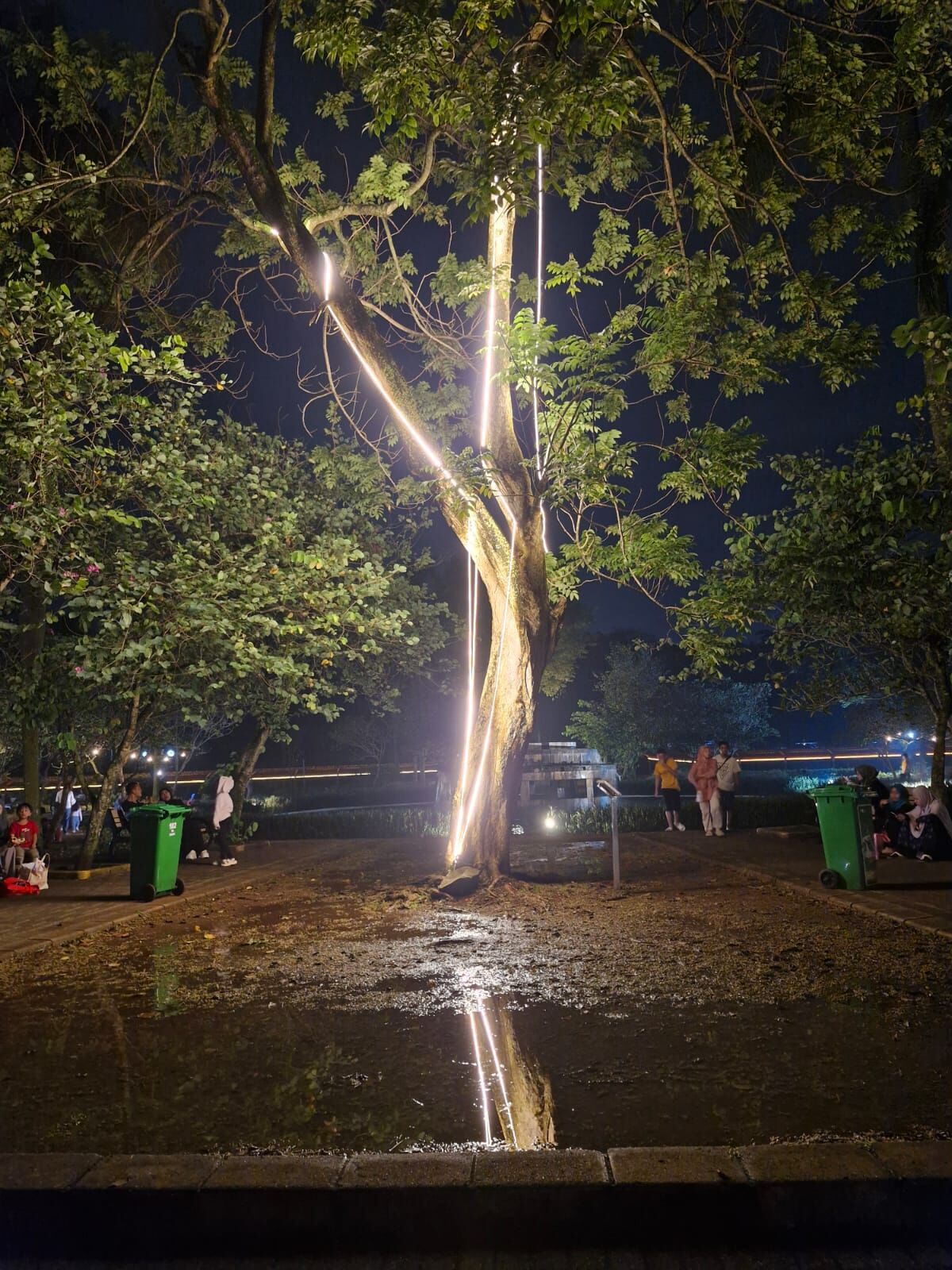
You might think this is the end of the review. Not quite, because technically there's another section. I'd call it the "walking zoo". As you walk around at night, you'll actually see other animals that aren't technically part of the Night Zoo — things like deer, and even crocodiles.
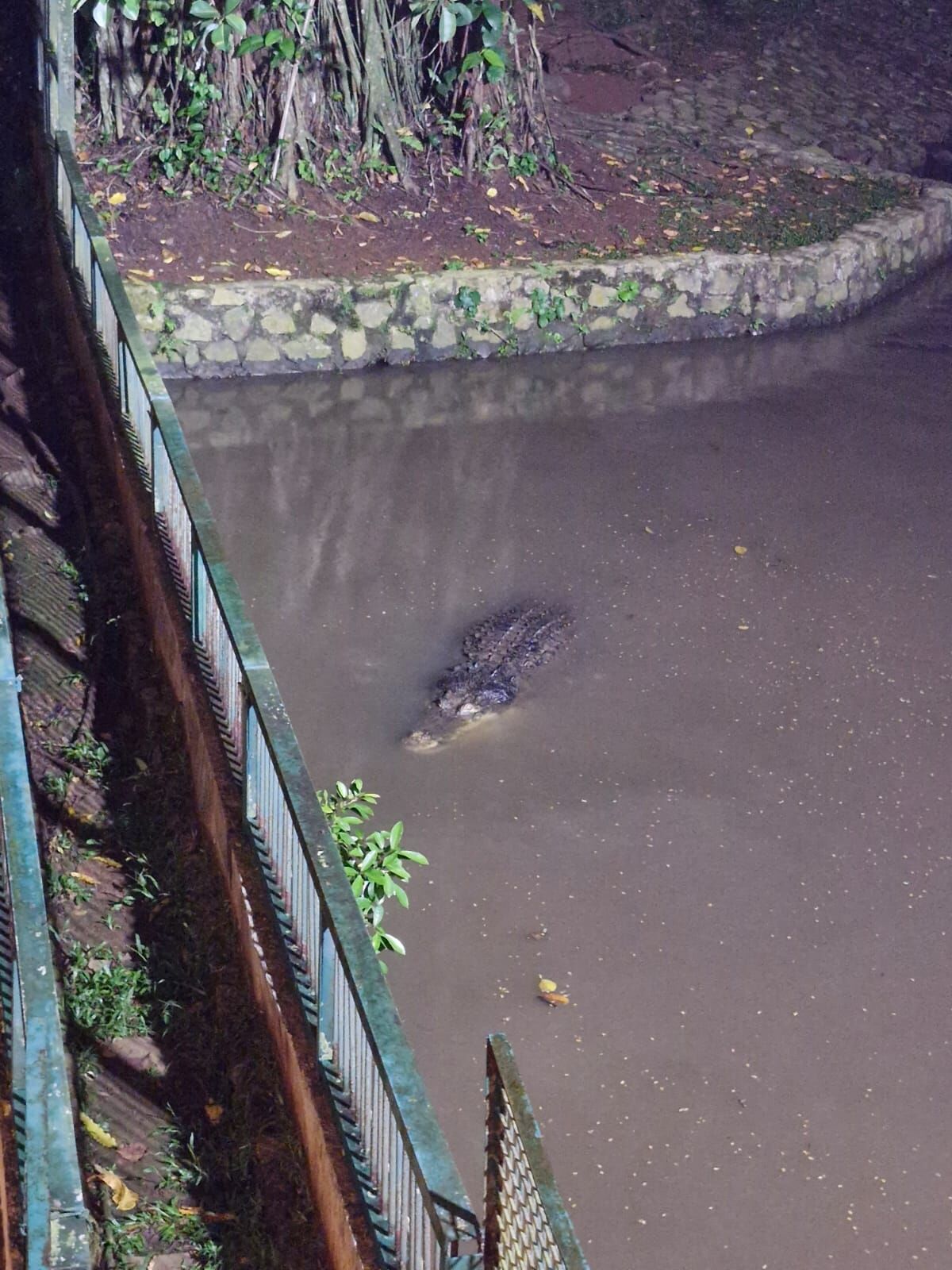
This is a missed opportunity: Ragunan could easily have put up some signs for Night Zoo visitors to read.
That said, the road itself is well lit, and it's a good walk. I just think it's a missed opportunity.
The verdict
So, to wrap up: the Ragunan Night Zoo is worth the price you pay. I was honestly blown away — especially given that Ragunan was somehow brave enough to charge 250,000 per five people when its daytime price is 4,000.
I'm impressed with their efforts. Despite its issues, Ragunan has shown that it is listening and determined to improve. Progress has been slow, but it's better than no progress at all.